

Leadership often asks us to be steady, composed, and productive, even when real emotions are moving underneath.
This is an UNFILTERED compilation, in which we bring together some of the most powerful, raw and unfiltered moments from our UNFILTERED series.
Across these episodes my co-host Daphna Horowitz and I very intentionally work to slow down and speak honestly about emotional truth at work. Anger. Grief. Presence. These are emotions many of us were taught to hide, especially in professional spaces. Not because they are wrong, but because they can feel inconvenient or uncomfortable.
We explore anger as information that points to values, boundaries, and care. We talk about grief as something that does not end when leave ends, and why silence can feel more painful than acknowledgment. We also look at presence, because allowing emotional truth requires the willingness to stay instead of rushing past what feels hard.
This is not about fixing emotions or performing leadership the right way. It is about noticing what is real, naming it with care, and choosing intention over reflex. You do not need to have all the answers. You only need the courage to stay with what is true.
Key Takeaways:
02:43 – Anger as Information – Greater understanding of how anger often signals passion, values, and boundaries rather than something to suppress or feel ashamed of.
09:12 – Gender, Anger, and Perceived Competence – Clearer understanding of how cultural double standards shape whose anger is accepted, whose is questioned, and how this impacts leadership expression and self-trust.
Listen to the full episode of UNFILTERED: Courageous Conversations about Anger and What your Fire is Trying to Tell You at https://www.courageofaleader.com/captivate-podcast/unfiltered-courageous-conversations-about-anger-and-what-your-fire-is-trying-to-tell-you/
15:36 – Naming Grief Creates Connection – Clearer understanding of why acknowledging loss supports trust and humanity, while avoidance can deepen isolation and discomfort.
22:57 – Grief Has No Timeline – Greater understanding of how grief continues long after formal support ends and why leaders must allow flexibility, language, and care beyond bereavement leave.
Listen to the full episode of UNFILTERED: Courageous Conversations about Grief and the Loss of Loved Ones at https://www.courageofaleader.com/captivate-podcast/unfiltered-courageous-conversations-about-grief-and-the-loss-of-loved-ones/
31:17 – Presence Versus Immediate Gratification – Greater understanding of how the pull to multitask and stay busy can undermine attention, trust, and meaningful leadership connection.
36:48 – Tech Boundaries and Chosen Presence – Greater understanding of how intentionally stepping away from devices strengthens focus, presence, and the quality of leadership attention.
Listen to the full episode of UNFILTERED: Courageous Conversations about Focus and Presence in a Distraction-Heavy World at https://www.courageofaleader.com/captivate-podcast/unfiltered-courageous-conversations-about-focus-and-presence-in-a-distraction-heavy-world/
Resources Mentioned
The Inspire Your Team to Greatness assessment (the Courage Assessment) – In less than 10 minutes, find out where you’re empowering and inadvertently kills productivity, and get a custom report that will tell you step by step what you need to have your team get more done. Get it here: https://courageofaleader.com/inspireyourteam/
You don’t need to have all the answers to lead well. Get your copy of the Clarity Kit for just $17 to learn the five practices to bring more clarity, confidence and courage into your leadership – https://courageofaleader.com/the-clarity-kit/
About the Host:
Amy L. Riley is an internationally renowned speaker, author and consultant. She has over 2 decades of experience developing leaders at all levels. Her clients include Cisco Systems, Deloitte and Barclays.
As a trusted leadership coach and consultant, Amy has worked with hundreds of leaders one-on-one, and thousands more as part of a group, to fully step into their leadership, create amazing teams and achieve extraordinary results.
Amy’s most popular keynote speeches are:
- The Courage of a Leader: The Power of a Leadership Legacy
- The Courage of a Leader: Create a Competitive Advantage with Sustainable, Results-Producing Cross-System Collaboration
- The Courage of a Leader: Accelerate Trust with Your Team, Customers and Community
- The Courage of a Leader: How to Build a Happy and Successful Hybrid Team
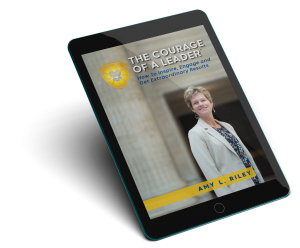
Her new book is a #1 international best-seller and is entitled, The Courage of a Leader: How to Inspire, Engage and Get Extraordinary Results.
https://www.courageofaleader.com
https://www.linkedin.com/in/amyshoopriley
Thanks for listening!
Thanks so much for listening to our podcast! If you enjoyed this episode and think that others could benefit from listening, please share it using the social media buttons on this page.
Do you have some feedback or questions about this episode? Leave a comment in the section below!
Subscribe to the podcast
If you would like to get automatic updates of new podcast episodes, you can subscribe to the, podcast on Apple Podcasts or Stitcher. You can also subscribe in your favorite podcast app.
Leave us an Apple Podcasts review
Ratings and reviews from our listeners are extremely valuable to us and greatly appreciated. They help our podcast rank higher on Apple Podcasts, which exposes our show to more awesome listeners like you. If you have a minute, please leave an honest review on Apple Podcasts.
Transcript
Welcome to the Courage of a Leader podcast. This is where you hear real life stories of top leaders achieving extraordinary results, and you get practical advice and techniques you can immediately apply for your own success. This is where you will get inspired and take bold, courageous action.
Amy Riley:I'm so glad you can join us. I'm your host. Amy Reilly, now are you ready to step into the full power of your leadership and achieve the results you care about most. Let's ignite the Courage of a Leader.
Amy Riley:Welcome to UNFILTERED where we have courageous conversations about the topics we're often taught to keep quiet about, especially at work. This episode is a compilation, and it's centered around something I think many leaders and teams are navigating, whether they have the language for it or not, and that's emotional truth at work. In this episode, you'll hear conversations about anger, grief and presence about emotions we're often told are unprofessional or inconvenient or better left at home. We talk about anger not as something to suppress, yet as information. We talk about grief not as something to avoid, instead as something that deserves acknowledgement, and we talk about presence, because if we're going to allow emotional truth at work, we have to be willing to actually stay with it. In these conversations, my co host, Daphne Horowitz and I work to invite a different kind of leadership, one that doesn't rush to fix, smooth over or move past what's uncomfortable. Instead, we ask what becomes possible when we slow down just enough to acknowledge what's real and respond with intention rather than with reflex, you don't have to agree with everything that you hear. You don't even need to take notes or draw conclusions. This episode is an invitation to listen and to notice what resonates for you. So let's get unfiltered.
Daphna Horowitz:The best part is linking anger to passion, and saying when you have a strong emotion such as anger about something, it really means that you are passionate about something. You're usually angry when you see an injustice, you see something that's been unfair. You see something that's just not working the way that you think it should, or the way you you know out of alignment with your values. Often the things that get us really angry means that something's happened that is out of alignment with our values, and it really directly links to what we are passionate about. What are the things that mean the most to us? So if you look at activists who are really out there to change injustices of the world, they come from an angry place. Of it can't be that there is so much poverty, that there's so much violence, that there's so much inequality. It can't be so what are you going to do about it? And that's the beauty of anger, and that's actually what I want to really say a little bit about.
Amy Riley:Now, the emotion can be a catalyst, right? And it can also show us what is important to us, right? Those those moments where you feel that emotion flare up, bubble up for you, what's the value that's being compromised in that moment? Or there could be a boundary that is being crossed for you or for a team member or for someone that you love. I mean, Daphna, I know the moments that I have been the most angry, someone has crossed a boundary of someone that I care about
Daphna Horowitz:Absolutely, absolutely. Yeah,
Amy Riley:it has, it has had me shouting in French on the street in defense of my dear friends.
Daphna Horowitz:No, it can be a friend. Can be your child. I remember a situation, you know, my child and their friend were in the middle of a heated argument, and then, you know, the one child started just laying into my child, and I was like, No, that's not then you become the fierce lioness, right? Yeah. Also, I love that you brought that in, because we get triggered. We get triggered, and we get a strong emotional response in return. That. And the anger, and it's important to understand, stop for a minute and say, what has been triggered? Yeah, you know, yeah.
Amy Riley:Well, I also noticed in this moment, Daphne, you know, we both gave those examples of standing up and not suppressing the anger, expressing something in those moments, we did it on behalf of others, yeah, there, there's something that I'm probably more automatically repressing it when it comes to me that's right, right. Like, like, should I do? I Right? And we've got that socialized tendency to automatically repress. Don't share this. You know, you'll look too emotional, you'll look too irrational, you'll look proportionally too strong.
Daphna Horowitz:I love that distinction that you brought in, because it's easy for us to go in defense of some someone and that we really care about, but when we are triggered for ourselves and we get angry all of a sudden, that red hot flash of, you know, temper, or even, I'm going to say that slight annoyance and irritation, because we're all different in our levels of expressiveness, of anger or even being aware of what's going on for us. But when we're defending, when we get angry about something that's to do with us, we are taking a stand for something that is important to us, as you said, whether it's a value, a boundary, or something that is very meaningful to us, we are going to get that emotional response and it's worthwhile noticing it. It's worthwhile noticing it and changing the narrative around it, because it's not wrong. We want to really change the narrative and say, What is this coming to tell me, what is it pointing to that I'm really passionate about or that I really care about in this moment, and that's really important to understand. So stop saying it's terrible to get angry. Or that person was angry because he, you know, road rage incident, and he came out and started screaming at the next call that, yes, it's anger, but it's actually aggression. It's the behavior that is so the What's wrong is the aggression behavior, the behavior now, emotion?
Amy Riley:Yeah, so we're saying, be aware of it, right? Learn from it, reframe it. You don't have to immediately feel shame and repress it. I know we did some research Daphna, and I really love what the University of Colorado studies found that expressing anger in healthy ways improves communication problem and problem solving, while suppression correlates with higher stress and poorer decision Exactly.
Daphna Horowitz:So think about the meeting where you have something really important to say, Well, someone has said something that you know is wrong because you've done some background research, or you've done some calculations or whatever analysis, and you know that someone just said something that is incorrect, but maybe you don't understand or remember the exact detail of it. So now you're not sure if you should say something or not say something, and you kind of badly with us, because you don't want to rock the boat and you don't want to but there's something in you, because you can feel this, you know, frustration rise or irritation rise, because you know that this person is leading the meeting in the wrong way. What are you going to do with that? And I want to say that just noticing that moment of irritation or frustration, or what's actually going on here, I feel like this person's leading me astray that is already pointing to something that is important for you to swear that maybe it's a truth or a different perspective that is worth voicing in the room, and just understand, okay, take that moment to say, why is this coming up for me now? What am I feeling and what is it pointing to? It's pointing to the fact that I have something that I want to add to this conversation.
Daphna Horowitz:Also, we wanted to talk a little bit about gender differences.
Amy Riley:Gender differences, yeah, yes, but there's a little bit of a
Daphna Horowitz:double standard when it comes to anger and perhaps being a little bit more assertive, you know, around stuff when it comes to men and women.
Amy Riley:Yes, I'd love to go right to what Yale study found. Yale study found that men's anger increased their perceived competence, while women's anger decreased theirs.
Daphna Horowitz:How crazy is that? Yeah,
Amy Riley:it is, it is it is crazy. And if you're a female out there who thinks, oh, yeah, Maya. Immediate reaction is to suppress Exactly, right? Some of that can much of that comes from how society interprets and reacts to a female showing emotion, showing passion, right?
Daphna Horowitz:So, when a woman shows emotion, then it's you're getting emotional. When a woman is angry, you're getting emotional, you're rational, yeah. And then I think there's also something in women, and we generalizing here, and of course, everyone's different, but in general, women will maybe if they have an outburst, I think they'll end up feeling much worse about it afterwards than men, because for men, it's showing dominance and control and power and okay, they can be forgiven a little bit of a angry outburst, but women takes a lot more to kind of smooth that over and becomes maybe a little bit of the perception that follows this woman.
Amy Riley:Yeah, I told, I told you this Daphne. Not too long ago, I had an exchange, and I got assertive. And it was actually, yeah, I actually intentionally decided to get assertive in that moment, I had a message to share, and I shared it, right? And I had to stick with it to have myself be heard. But then walking away, I probably had two steps of like, okay, great. Good for you, Amy. And then I turned into, Oh, was it too much? Like, you know, like somebody observed that, what are they thinking? Right? Did they think? You know, what is this middle aged woman going on about? And immediately the judgment came in there, and I thought, isn't this so interesting? I intentionally decided to be assertive. I was, I do not feel like I did not turn into too overly aggressive in that moment, but I still was having that reaction of viration and question and shame, and was it too much?
Daphna Horowitz:Yeah, I think because we've been conditioned, we've been conditioned to not express too much, and I know that women are culturally conditioned to stay likable, while men are culturally conditioned to be in control, you know. And I think there's a big difference there, and the likable incompetence is very much linked as well, because the more likable they've been, there's been research done about that as well. Is it the more likable you come across, the less competent people assume that you are, and that kind of can get added into this mix. But then, when women try to reduce their likability factor and be more assertive, they get kind of also been criticized for that as well, that it isn't fully accepted. Yes, yes, yeah, yeah.
Amy Riley:I mean, I know we're gonna go into you know, how do we shift this from reacting to having that thoughtful response? I gotta say overall for me, often, what I need to tune into is, what is my commitment? What is my commitment in the big picture, right? And setting aside how likable, or because I want people to like me, right? But setting aside how likable Am I in the moment? But here's something I care about. Here's a commitment that's pulling me forward, so I'm going to speak up. I'm going to say something, even if I don't do it perfectly.
Daphna Horowitz:Yeah, and I think that this now really gets to that place of the separation, which I think is so important. What we were really alluding was saying before is that just the separation between what is the emotion and what is the response or behavior as a result, and then what is the impact of that behavior and response? So when we have a certain emotion and we want to have a certain impact, then we can't have that automated, triggered response without thinking, because we're probably not going to have the impact that we want. And that's something you know, that because I am a very expressive, passionate person, you might speak about a topic that I'm really passionate about, and people can think that I'm angry, and then the impact is just not there. So that's also sometimes a misinterpretation of Express expressiveness or passion, or, you know, the tone that you're using, how you speak, but bringing it back to anger, and it really is about understanding when a. I'm angry, really noticing that and saying, Well, how do I want to express myself so that I have the impact that I want to have in the situation? And not tell you, Okay, I'm angry. We're not saying anger is okay. Be angry. Do what you want, because co chairs, no, in all likelihood, you're not going to have the impact that you want. Your message is not going to be heard. It's not going to land in the way that you want. But really, really, really important upfront is to recognize it first and foremost,
Daphna Horowitz:actually speaking to people. I sometimes see that people are worried that if they're going to ask a question or say something about the loss, they'll remind the person who's experienced the loss of their loved ones, and that will make them even sadder. And I think that's actually I just want to bring that up because that's totally unrealistic, because loss lives with the with the grieving person all the time, you are not going to remind them that they lost it. Sibling, parent, child, friend, whatever it is, you're not going to remind they know exactly, much Yes, more important to say than to be scared that all of a sudden grief will be in the room.
Amy Riley:Yeah, yes, exactly, definitely. I'm well aware that my father and my sister are no longer with us on this planet. I'm well aware you're not gonna like all of a sudden. Me of that exactly, and I had forgotten I would say, in fact, I'm well aware. Now, this might not be true for everybody, but I'm well aware if I haven't seen someone since my sister passed, that's the most recent, and then that kind of feels weird to me. If we haven't seen each other in a while, you're close enough to me to know that I've experienced that loss, and we don't talk about it. Yeah, that actually feels weirder and harder for me than someone saying something.
Daphna Horowitz:Yeah, I think what you're saying is so important, Amy, because what you're actually saying is it is such a part of your reality. It's not that someone's going to remind you it is such a part of your reality. And I've also seen how it changes you in some way. Grief or the loss of a loved one all of a sudden has to, I guess, the grieving person redefines their identity and reshapes their life. Now without this person, so when you're seeing someone for the first time since you've lost your sister, you feel very different, and you want that to be acknowledged because your life is completely different, and not acknowledging that, just carrying on as if nothing's happened and everything's exactly the same, hurts. I would imagine that really hurts,
Amy Riley:yeah, like this happened. It was overwhelming. So so sad, like had, I mean, I'm just thinking these reverberations like in in my life. So yeah, for that to not be acknowledged feels, I don't know, like there's this major thing that happened and shook up my world and my family, and, you know, so many things feel different. Yeah, like, like, what? We're not going to talk about that now, of course, I'm a processor, and, you know, I'm I will speak things out loud, but I've always thought that a simple acknowledgement, like, Hey, I haven't seen you in person since your sister passed. I just wanted to acknowledge that, and I'm so sorry for that loss. You say that thing, and then you'll see if the other person wants to spend any time there or not, right? Because that other the person can respond with, like, Oh, I really appreciate it. Yeah, it was a tough time. How are you? I see you on the trip, you know, like, you'll see how much time they want to spend on it. Or, you know, might be that they want to go into that conversation for a little bit, and it might be that their eyes tear up, or there's an emotional reaction, and that does not mean that you did anything wrong, right?
Daphna Horowitz:Very good. Good. Point that you bring up there, if there is an emotional reaction, just let it be, you know. And I think that the invitation is to say, I'm here. I'm here with you. I don't need to say anything. I just acknowledging the pain and saying, Yeah, that's tough, and I'm here for you, if you want to talk, if you want to go out for a coffee, if you want any, if you need anything, I'm here. I think that's all that needs to be said. Yeah, yeah.
Amy Riley:Yeah, and those tears coming up in the eyes might even be like, Oh my gosh, this is so great. You're acknowledging this. I'm feeling the connection this moment like this actually feels really warm and sweet to me that you're, yeah, you're putting yourself out there to have this connection.
Daphna Horowitz:You know, it makes me think about social settings and work settings, and I think it's important to look at both. But the story that comes to mind for me is that we were actually invited to a dinner at a friend's of ours, and they invited someone who had lost his wife and two children in a horrible terrorist attack shooting, and there was this big elephant in the room. He was an incredible person. He was so open and talking. And, you know, the conversation was flowing. I remember we afterwards, we spoke about it, us and our friends and we were a little bit cautious. Do we say something? Do we not say something? What do we do? Do we pretend just have regular conversation with this man who's lost half his family, and as I say, it's this elephant in the room. Parts of us want to just say, Let's carry on as normal, pretend nothing happened. Parts of us want to acknowledge that this big thing happened in his life, and at one point I just said, I said to him, you know, I just want to appreciate the energy that you are bringing and the inspiration and just being with you at the table today with everything that's happened has been a privilege and An honor for all of us. And he just said, thank you. And we moved on. And he spoke a little bit about his family, and he started to share a little bit more. And my friend turned around to me after that, she said, Thank you so much for saying that. Yeah, elephant in the room. And then once it was named, it was named, as you said just now, yeah, he set the tone for where the conversation would go. Does he want to share memories? Does he want to talk about what his life is like, or does he want to just continue and have lovely dinner party conversation? And it was just very important to name it, to acknowledge it. It's here, so let's just acknowledge it. That seemed
Amy Riley:like a very beautiful and appropriate way to acknowledge and that's what I heard when you were sharing the words that you said with him. It just felt like I naked. You know, is acknowledgement you, I think you said is energy. Yeah, exactly. So, yeah, an acknowledgement, and then let the person take it where they will.
Amy Riley:I think that there is this thing in our society, globally and across religions and faiths where, like we, we come together to support the person in the initial days, maybe even weeks. But then it will go away, and there will be certain circles in your life, who might never, ever mention it again. Having my own business, it's nice to come back to work. It's, you know, I've, I've created work that I love and enjoy. So I wanted to come back to it and engage my mind and my energy into my work, and it's had significant impacts on my energy, and I might not, might not be able to have as many conversations in a row, or I might end my days sooner. I mean, I can see it looking back now. I mean, after my father passed, I pretty much did what I needed to do for my kids, did what I needed to do for my clients, and then slept,
Daphna Horowitz:you know? And, yeah, that's actually very similar to a trauma response. Is you manage what you need to manage, the very bare minimum of what you know you need to do to get through the day, and that's it. You have no capacity for more than that. I have to say, like I've had days when I'm experiencing that with the level of trauma that we're experiencing in our country at the moment, it's like really low flame, I know for this period, the low flame days, do what I need to do, and that's it. Not expect anything beyond that. And I think that's also an important point, because I think if we fighting that, and we think, what's wrong with you, why aren't you doing more things or extra things, or, you know, why aren't you more okay, inspiring, inspired, or whatever, why aren't you able to handle you used to be able to handle. Why are you sleeping so. That for people who are grieving, it's really okay, it's normal. Your body is going through something. There's a process that's happening. To know
Amy Riley:that, and gosh, if you just have a little bit of conversation about it, because now Daphna, you use the frame a low flame day, right? So now I have that language, and I can check in with my friend, Daphna. How are you doing? Is it I'm something it might be a low flame day, right? Do you want to talk
Daphna Horowitz:about, would that be? That is awesome. That's awesome checking in. You know, that's caring. That's really caring.
Amy Riley:I'd like to transition a little bit more to the workplace Daphna, because I think many leaders listing might think that's not my place, right? You know, I'm not a therapist. But again, I think going back to this term in this approach, we've been using acknowledgement, right when someone comes back from bereavement leave, just acknowledging that, yes, you've been off on bereavement leave. You know, I know, gosh, it's got to be tough losing your father, or whoever it is. I know the bereavement leave is over, but the bereavement is not over. I love that. How are you
Daphna Horowitz:bereavement leave? Oh, so I just wanted to emphasize what you just said, the bereavement leave is over, but the bereavement isn't over, and it takes a long, long time. So I think that's really important to acknowledge. There's the first of everything in the first year, the first birthday, the first holiday, the first anniversary, the first, whatever it is, so many firsts that are going to be missed, so that bereavement takes time and there is no deadline on it. There is no, you know, this is how long it takes.
Amy Riley:Yeah, yeah, oh, Daphna, I had once I was saying something about my father and the loss for me and somebody went, how long ago did your dad die? Oh, I felt so judged in that moment, and I haven't forgotten it. Yeah, and that that did not feel like support, but how? How lovely, if like going into a holiday season, you know, a leader would could say to a team member, or even to the team collectively. I know many of you have lost loved ones, right? And that can be really tough around the holidays. Let us know how you're doing. Let us know what you need. Let us know if it's a down day.
Daphna Horowitz:Yeah, absolutely, yeah. I know I worked with two clients who had a very, very special bond with their father, and I remember my one client going back to work. And, you know, I think there's something about grief in that it's invisible because people prefer and want and expect you to just now show up at work and be you and be okay. And yeah, he's struggled for a long time to get back into feeling like her regular, let's say, high performing leader that she is and and was, but it took her a long, long time, yeah, and it's exactly what, but that was like six months ago. It was a year ago, and she had this continue, as we said, the waves. You know, one day she'd wake up and it would just hit her again and she felt low flame day.
Amy Riley:So, yeah, we and so definitely, I want to bring up a another question that some listeners might be wondering. So we've talked about low flame or down day. What if someone's flaring up? What if they're angry? What if they're irritable? What if they're something's coming up for them and it's coming out in that way. So this question of, you know, you're a colleague, or you're a leader on a team, and wow, someone is prickly in a way that they're not usually. Let's talk about what we do there.
Daphna Horowitz:I think that's actually a good point. It's true. Because I think that, you know, we assume that grief is gonna show up as feeling down, feeling sad, but it might not. And that's actually a really good point. And I would add to that also, it might show up completely normal, like, I'm
Amy Riley:I'm equipped, oh yeah, yeah. Like I'm marching, yeah.
Daphna Horowitz:Hang on. Let's move on. Yeah. I think those are good, good questions. Those are good questions. And I think that, I mean, for me, what's coming up with a glaring app person is to actually have the conversation, like, sit down and say, how? Are you doing? I wanted to know and not. I think it's more triggering if you're going to say, Listen, I've noticed that you know you're not yourself today. Oh, that's another statement that I really, really dislike. And notice that you're not yourself today. What does that mean? So just, just to just check in and say, I want to check in with you. How are you doing really? How are you doing really? Exactly. How can we support you? You know, I think from even the leaders or HR perspective, to offer maybe help and counseling beyond, you know, what I can do for you at work, that's also an option.
Amy Riley:Yes, so acknowledging giving empathy and knowing what the resources are that your company provides that employees have access to. You don't have to diagnose, you don't have to be a therapist, but be with the person in those moments and make sure that they're aware of or encourage them to take advantage of any resources or support that are available. That's why they're there.
Amy Riley:So sometimes, if we don't see what is going to be the immediate gratification benefit. We don't play the game, right? And I think, like, I could do something else here. I could get one, you know, I could respond to this other message really quickly.
Daphna Horowitz:I think you're hitting on a really important point here, which is the difference between immediate gratification and an unknown. I don't know what I'm going to get if I'm going to be fully present, but I know that if I try to do two things at the same time, I'm going to at least feel like I'm doing two things at the same time. Yes, and I think that's a really important point. Is that immediate gratification, I feel like I'm doing something that I need to do. Am I doing it well? Am I really connecting? Am I really achieving what I want? Am I getting the feeling that I want? Not sure, but I know that the inquiries today, dad, wow, you know what? I think this is a topic that is so close to my heart, because I think over time, as we've both worked with people over the years, whether it's one on on one or in group settings, we see how presence has taken a nosedive in terms of these situations and these contexts and even team meetings. I had a manager tell me once it doesn't matter if I'm sitting on my laptop while I'm having a team a meeting with my team, because if they need me, they'll just call on me, and then I'll answer. And I said to him, do you think that it makes no impact on your team if your laptop is open and you're working away, or if you close the laptop and just engage in the conversation with them? And it actually took a while, and I don't have it because he didn't really want to admit it, or because he really had to think about it, it took a while for him to really get that being present and being focused and really giving your team attention creates a different kind of listening and a different kind of engagement, because that's just being called upon when there's a question. It's also picking up the dynamics of the team, picking up the nuance of the things that are said, and picking up things that are not said. And you can't do that if you're not present, but you need patience. You need patience, and you need to
Daphna Horowitz:breathe, and you need to slow things down. And I think that's scary for people. The idea of slowing things down is very scary.
Amy Riley:Yes, yes. And not knowing exactly what we're going to get out of that practice, it's bringing me back to the idea of intention, right? So if I'm that manager who's been on my laptop for team meetings in the past, and now I'm going to talk myself into closing that laptop and being fully present during that conversation. What's my intention? Right? Is my intention to like to really understand what's going on with the work? Is my intention to really tune into how people are doing? Is my intention to listen and provide whatever leadership I can, right? Oh, that's an obstacle I could help them remove. What's my intention for tuning, tuning in reasoning and
Daphna Horowitz:what's scary about it? Amy, what is scary about it? Because I think there is something scary, and I know, I mean, I don't know if, and maybe, as you say, that's another reflection question, but, and I'm bringing it back to the fear, but I think if we look at when we avoid doing something, why are we avoiding it? Usually, because we scared of something.
Amy Riley:So yeah, I can just make some stuff up here, Daphna, but it. Could be but what if my team doesn't need me?
Daphna Horowitz:What if I feel like I'm not adding value because I haven't got anything to add so I'd rather look busy.
Amy Riley:What if I start to get concerned that they're not on top of these things, or this is happening, or, Oh yeah, I'm noticing that people are struggling now. Now, how do I support them? Now I have more questions and concerns on my brain. It could also be I'm used to getting the, you know, A, B and C tasks done during this call, and now I will have to find time elsewhere to do A, B and C.
Daphna Horowitz:It might be actually, what if I don't get everything done so I need to use it, and what if I don't answer my boss and he's gonna get cross, or he or she will get cross with me, because I haven't been super available. There's a lot, I guess, those are fears. Those are fears that are interesting to notice and manage. So I guess that question of what is really scaring me right now, if I put everything down and just focus, or if I slow things down and just focus on one thing,
Amy Riley:yes, yes, because then we can set ourselves up for success for being focused, like if we're concerned that we're not going to be able to respond to our leaders, our leader or leaders during that time, send that out, yeah, like, Hey, I found that I've decided I want to give my team my my full attention. So I'm going to be completely off of devices during these hours. I'll be back on by this time. So you can, you know, you can expect a response by then.
Daphna Horowitz:I know we spoke about tech boundaries, but you know, I am Jewish, and I keep the Sabbath, and I switch off my phone for 24 hours every single week, and I love it. I'll be honest, I absolutely love it, but it's off, and I don't use it at all. But okay, so that's one example,
Amy Riley:yeah, well, but Daphna, I would like to double click on tech boundaries right here. Yeah. Out of the rhythm, out of the practice of I have to be checking, I have to be run, run. I have to tune in. And the more that we break that pattern and we break that desire for those dopamine hits, the easier it will be for us to intentionally focus our presence when we
Daphna Horowitz:choose to Right, right. But I'm saying further than that, there are sure every person has something they will not pick up their phone for. So, you know, I'm thinking of worst case scenarios, but you know, if you're in a doctor's room and getting some really important information about your health, and when you bet you're not gonna look at your phone if it pings,
Amy Riley:a family member is crying in front of you and you're supporting them, you're not gonna pick up your phone or right or
Daphna Horowitz:driving when we driving. I know, I know it's a habit that's difficult to break, but I think that mostly people are very conscious of not picking up their phone or trying to read texts when they're driving. So I'm saying the capability is there, the capacity to decide there is, there are things I will not pick up my phone for right? When you're in the shower, you are not going to be on your phone, okay, purely because, I don't know, we don't have waterproof phones. When we are swimming in a swimming pool, we are not going to be looking at messages. I'm willing to bet other forms of sport, cycling could be difficult to be looking at messages. There are moments that we will be non negotiable on that. So what if we expand those just a little, just a little
Amy Riley:Yes, yes. Give yourself that nature walk in the middle of the day, you know? Yeah, out the phone, right, right phone. But I think this is it. This is an invitation, and I'll take this one on myself as well. Daphna, like, yeah, yeah. How do we take those spaces where we're not immediately responsive, that we're not tied into our tech and expand those spaces in our days, create more spaces,
Daphna Horowitz:touch our phones on average,:Amy Riley:how to comfort them, what if I don't know, hey, if they bring something real up, I might not know what to do. I might not be prepared for what's coming up. I know we've talked some Daphna about the benefits of being present. I wanted to bring some more into our conversation. You don't know what you don't know. You don't know what might come up. You don't know what might click or you might see or hear in a new way. Increased cognitive efficiency. Right when we're focused, our brain can get into a flow state, and we're using our energy more widely. Studies show that that task switching, because we can't really multitask, right?
Daphna Horowitz:Switching exactly, you're never doing a few things at the same time,
Amy Riley:can reduce productivity up to 40%
Daphna Horowitz:which makes sense, which makes sense, because you're not really focused. And I just, I want to interject here with mentioning the book, Deep Work by Cal Newport. I think it is an amazing, amazing book. And he talks about focus being such a limited resource in our day and age, because of the distractions and because of the, you know, myriad of things that we have going on at any point in time we are unfocused. So those people that can cultivate focus and can really do deep work, those are going to be our unicorns coming up in the future, because very few people are able to do that.
Amy Riley:Yes, yes, you can be the leader. You can be the service provider that provides something unique, exactly in our world, in our workplace right now, yeah, just being able to focus and be present.
Amy Riley:Thank you for listening to the Courage of a Leader podcast. If you'd like to further explore this episode's topic, please reach out to me through the Courage of a Leader website at www.courageofaleader.com. I'd love to hear from you. Please take the time to leave a review on iTunes that helps us expand our reach and get more people fully stepping into their leadership potential until next time, be bold and be brave, because you've got the Courage of a Leader.




 A Summary of The Courage of a Leader® 4 Pillars