
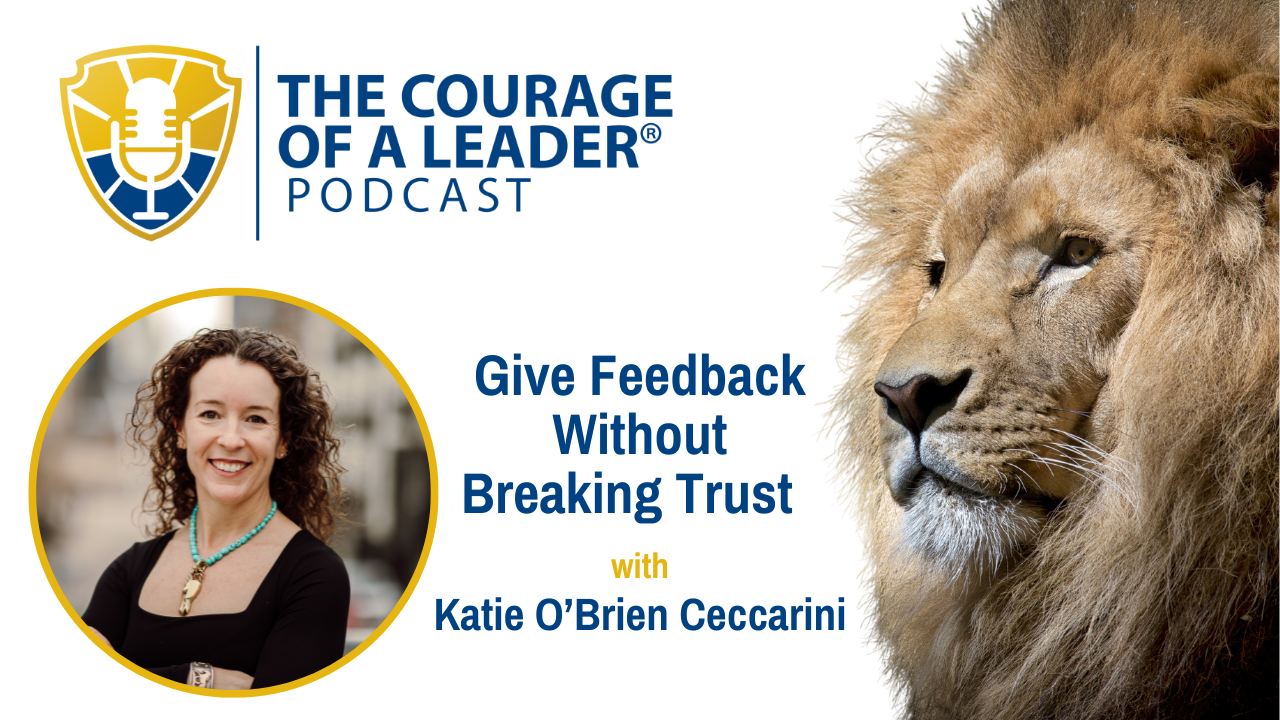
How do you give difficult feedback without damaging trust?
Katie O’Brien Ceccarini, author of Fearless Feedback: Everything Managers Have Never Been Taught About Feedback and founder of Endurance Management Coaching, brings two decades of experience leading, managing, and training teams. She shares how leaders can prepare for hard conversations, navigate emotional reactions, and say what needs to be said while preserving the relationship.
Katie explains that fearless feedback starts before we ever choose the right words. It begins with our mindset, the strength of the relationship, and the intention we bring into the conversation. When we believe in the other person’s ability to grow, we are more likely to communicate with conviction, clarity, and care.
She also shows us how to stay present when feedback brings up defensiveness, emotion, silence, or resistance. Instead of reacting to what we see on the surface, we can get curious about what may be happening underneath. We can acknowledge someone’s experience without abandoning the message, and we can refocus the conversation without turning it into a debate.
When we strengthen our mindset, relationships, and delivery, we can give feedback with greater courage, build trust through difficult moments, and create conversations that help people grow.
Key Takeaways:
- Prepare Your Mindset for Feedback: Explore how the beliefs you bring into a conversation can shape how your message is received.
- Strengthen the Relationship First: Consider how trust and safety can create a stronger foundation for honest feedback.
- Open the Conversation Well: Discover how a thoughtful headline can make difficult feedback easier to hear and engage with.
- Navigate Difficult Reactions: Examine how the HEAR framework can help you respond when feedback triggers defensiveness, emotion, or resistance.
- Make a Better Second Choice: Learn how noticing your first reaction can help you approach challenging feedback conversations with greater courage.
Resources Mentioned
The Inspire Your Team to Greatness assessment (the Courage Assessment) – In less than 10 minutes, find out where you’re empowering and inadvertently kills productivity, and get a custom report that will tell you step by step what you need to have your team get more done. Get it here: https://courageofaleader.com/inspireyourteam/
You don’t need to have all the answers to lead well. Get your copy of the Clarity Kit for just $17 to learn the five practices to bring more clarity, confidence and courage into your leadership – https://courageofaleader.com/the-clarity-kit/
About the Guest:
Katie is a developer of people with two decades of experience leading, managing, and training teams.
Her career spans early education, a decade at Yelp where she created and scaled all Customer Success training, and then as Head of Learning & Development at Opendoor she elevated employee onboarding and leadership development. She has the rare ability to bridge the gap between what HR and L&D leaders need and what actually lands with leaders in the business.
In 2026, she published Fearless Feedback: Everything Managers Have Never Been Taught About Feedback, a practical guide that equips managers for the development and performance conversations that HR professionals depend on them to have.
Today, Katie runs Endurance Management Coaching, partnering with organizations like eBay, Munchkin, Vital Farms, and PAN Communications to develop their managers and leaders.
Over the past 20 years, she’s managed, trained, and developed thousands of people, and everything she teaches comes from real teams, real conversations, and real results.
Katie’s leadership style is best described as human, with standards. She cares deeply and holds a high bar.
When she’s not working, she’s getting dirty at the barn with her horse, training for triathlons, or hanging out with her son and husband in Denver.
https://www.enduranceboss.com/
https://www.linkedin.com/in/katie-ceccarini
About the Host:
Amy L. Riley is an internationally renowned speaker, author and consultant. She has over 2 decades of experience developing leaders at all levels. Her clients include Cisco Systems, Deloitte and Barclays.
As a trusted leadership coach and consultant, Amy has worked with hundreds of leaders one-on-one, and thousands more as part of a group, to fully step into their leadership, create amazing teams and achieve extraordinary results.
Amy’s most popular keynote speeches are:
- The Courage of a Leader: The Power of a Leadership Legacy
- The Courage of a Leader: Create a Competitive Advantage with Sustainable, Results-Producing Cross-System Collaboration
- The Courage of a Leader: Accelerate Trust with Your Team, Customers and Community
- The Courage of a Leader: How to Build a Happy and Successful Hybrid Team
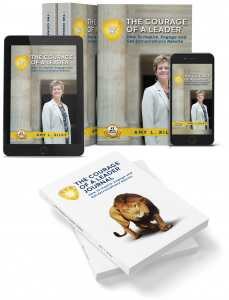
Her new book is a #1 international best-seller and is entitled, The Courage of a Leader: How to Inspire, Engage and Get Extraordinary Results.
https://www.courageofaleader.com
https://www.linkedin.com/in/amyshoopriley
Thanks for listening!
Thanks so much for listening to our podcast! If you enjoyed this episode and think that others could benefit from listening, please share it using the social media buttons on this page.
Do you have some feedback or questions about this episode? Leave a comment in the section below!
Subscribe to the podcast
If you would like to get automatic updates of new podcast episodes, you can subscribe to the, podcast on Apple Podcasts or Stitcher. You can also subscribe in your favorite podcast app.
Leave us an Apple Podcasts review
Ratings and reviews from our listeners are extremely valuable to us and greatly appreciated. They help our podcast rank higher on Apple Podcasts, which exposes our show to more awesome listeners like you. If you have a minute, please leave an honest review on Apple Podcasts.
Transcript
Welcome to the Courage of a Leader podcast. This is where you hear real-life stories of top leaders achieving extraordinary results, and you get practical advice and techniques you can immediately apply for your own success. This is where you will get inspired and take bold, courageous action. I'm so glad you can join us. I'm your host, Amy Riley. Now, are you ready to step into the full power of your leadership and achieve the results you care about most. Let's ignite the courage of a leader. Katie O'Brien Cesarini, thank you for being on the Courage of a Leader podcast today.
Amy Riley:Thank you. I'm thrilled to have this conversation, Amy. Yes, me too. I'm excited to have it. I think it's important to have it. I'm excited to have it with you. We are going to be talking about giving feedback. We're going to be talking about giving feedback. Giving feedback, we know it's important to do, but often we hesitate to do it. It does take courage. Handling a challenging reaction that we might get takes courage. So today we're going to talk about how do we prepare ourselves, our mindset for a feedback conversation. How do we open the conversation well so that the other person has the
Amy Riley:best chance of being able to listen, absorb, and act on it. And then, how do we navigate whatever comes next?
Amy Riley:Katie O’Brien Ceccarini: Yes. Oh, I'm excited to dive in. Like jumping at the bit already.
Amy Riley:Excellent. So let's start with how do we prepare ourselves? How do we have that right mindset going into a feedback conversation, Katie.
Amy Riley:Katie O’Brien Ceccarini: Yep. So I absolutely have experienced, believe, and now teach that fearless feedback is where you can say what needs to be said without damaging the relationship, and that happens when you are operating at a powerful intersection. So, listeners, imagine a Venn diagram where you have three components of mindset, relationship, and delivery. And when you are at a strong intersection of your head is in the game, you are preserving your relationship. You have built a strong foundation of relationship first, and then you're thinking about trust and safety in that
Amy Riley:interaction, and then you wordsmith and you refine your delivery. That's where you get to have a fearless feedback conversation. But it starts with the mindset. If you're thinking, "Oh, I have to have this conversation, or "Okay, I gotta walk on eggshells because they have a lot going on, and I don't know if they can handle it. If that's where your brain is at, your conversation you're going to lack conviction and confidence in your message. So it has to start with, oh, let me pivot how I'm thinking, which is, I have information that's going to help this person be their best. Ooh! All of a
Amy Riley:sudden, that feels like a different conversation you're stepping into.
Amy Riley:That's coming from a much different intention. Let me repeat for listeners the intersection you just talked about: the intersection of mindset, the mindset we, as the feedback givers, are bringing to the conversation the relationship, so focus on building a strong relationship over time. But I'm also hearing, like in that moment, how do you have an intention for trust and safety, and then delivery? Spend a little time on the wordsmith. We're going to spend a little bit of time today talking about how do we wordsmith that opening. Okay, so I've got some information to help the
Amy Riley:person be their best.
Amy Riley:Katie O’Brien Ceccarini: And generally speaking, of in the world of feedback and manager training and leadership books, when it comes to feedback, everything it's like beating a dead horse. Of here's why feedback is important. Here's why. Here's why, and we don't talk about how. Well, then when we do talk about how, it's only how do I say this? Well, if you're missing the wait, I believe in them and I want them to succeed, and your mindset is rather in a place of, oh, they're going to get defensive, or if I bring this up, this is going to hurt our relationship. It's not going to be a good
Amy Riley:conversation. So mindset has to be the starting place.
Amy Riley:I love that your fearless feedback book is now on the market, so people can get this really practical, tangible information about how and at all. I want to underscore. You said the words "believe in them, Katie. I really believe this. I think we've all had a leader who seemingly said and did the right things, but we didn't. It didn't hit right for us. It didn't land. We didn't believe it because it felt like it was performative.
Amy Riley:Katie O’Brien Ceccarini: Yes,
Amy Riley:they're doing the behaviors, but is it coming from an authentic, genuine place? So just finding what do you believe in about this person, and I mean, sometimes someone's been messing up, and we have to give them some constructive feedback, and we might be like, "Oh, they have been doing some not smart things recently, but what can we believe? Right, we believe this is a capable person. We believe this is a person that can change. We believe they have good intentions. We believe something. Find the something positive that you believe about them to anchor on going into the
Amy Riley:conversation.
Amy Riley:Katie O’Brien Ceccarini: Yep, and that then also strengthens your relationship. So that's again of mindset relationship delivery. Is that if you are if your mindset is they're not capable, they're not good, they're not right for the role. If you if that's your mindset, well, your relationship they're going to feel your lack of investment in
Amy Riley:them, and they will
Amy Riley:Katie O’Brien Ceccarini: feel that you are checking the boxes, but that you aren't genuinely there to say, you know what? I believe you're more capable than what you're doing right now, and I want to set you up for more success. So that is then speaking to building trust and safety within the relationship as well,
Amy Riley:beautiful. So find the positive, authentic things that you can believe and ground your mindset. And regardless, that first thing you said, this is information to help the person be better.
Amy Riley:Katie O’Brien Ceccarini: That's all it is. Being focused on that rather than I'm so concerned about what the reaction is going to be. Well, and we start to tell a story too. That when we, you know, right of like we've got our comfort zone here, we get out of our comfort zone, and the stories start to to spin. Where then we start telling ourselves of, oh, you know what, they don't have a growth mindset, so they're not going to receive this feedback well. Or, you know what, I've already given this feedback, and it didn't do anything. So you know what? This is my first rodeo. I'm not going to.
Amy Riley:I'm like, why was my time? So now you're telling these stories that are now, when you get to that delivery, your delivery is going to suck,
Unknown:and you are
Unknown:Katie O’Brien Ceccarini: going to feel like
Unknown:you again
Unknown:Katie O’Brien Ceccarini: had this conversation that didn't go anywhere. Well, didn't go anywhere because you already thought it wasn't going to go anywhere, and for your relationship, they're like, "You don't care about me,
Amy Riley:so it becomes that self fulfilling prophecy. Exactly,
Amy Riley:I love it, Katie. Let me pause us here because we're going to get more into the how to. Yes, let me tell listeners more about you, Katie O'Brien Cesarini is a developer of people. She has two decades of experience leading, managing, and training teams. Katie runs endurance management coaching, partnering with organizations like eBay, Munchkin, Vital Farms, and Pan Communications to develop their managers and leaders. Earlier this year, she published fearless feedback. Everything managers have never been taught about feedback, a practical guide that equips managers for the development and
Amy Riley:performance conversations that HR professionals depend on them to have. Thank you so much for being here to share your experience and your expertise and your evidence-proven frameworks for us today.
Amy Riley:Katie O’Brien Ceccarini: Absolutely. Well, when I set out to on this project of writing a book, of you know, really, it was gosh, we aren't taught what to do when someone has personal life challenges, and it's seeping into their work. We're not taught what to do after the conversation. Should we follow up? Do we need a document? We're not taught what to do when someone cries when we give them feedback. All of these things. We're not taught how to ask for feedback and actually get good feedback. So I want I wanted to deal with things a little bit differently and give people a very practical
Amy Riley:guide that they can flip open and say, "Okay, that's what I'm facing. Okay, let me read. Okay, now I have greater confidence and competence to go try.
Amy Riley:It's been needed for way too long, Katie. Where should we go next? I mean, you just mentioned a few things. Like we don't talk about like what happens if people have personal issues. What do we do afterwards? What if we do if someone cries? Should we talk about how to handle the difficult emotional reactions that one? Get because that often is what stops people from moving forward with the conversation they know they need and want to have.
Amy Riley:Katie O’Brien Ceccarini: Yes. So
Amy Riley:how do we deal with a quote unquote bad reaction?
Amy Riley:Katie O’Brien Ceccarini: Yep. So a couple of things. Of one is it's still rooted in the fearless feedback frame. So we still have mindset to be thinking about. We still have relationship to be thinking about, and then we still have delivery to think about.
Amy Riley:Okay.
Amy Riley:Katie O’Brien Ceccarini: So, if I were working with you, Amy, and I gave you feedback, and you know, I'll model model the framework, the headline observation ask framework first, and let's say that you give me a big reaction, you push back. We'll just do a real time play with it. So if I came to you and said, Amy, I want to set you up for greater success. I'm seeing an opportunity for you to reevaluate prioritization. What I'm noticing is a pattern of when you have conflicting priorities on your plate that you can freeze and periodically be working on the activity or the project that
Amy Riley:isn't the highest priority. So I want to work with you on what does it look like to reevaluate how you're prioritizing what's on your plate. So let's say imagine I gave you that feedback, and you were like, "No, I don't. This is your fault, Katie. You didn't prioritize. You're giving me
Amy Riley:too much. I'm prioritizing it the best I can over here.
Amy Riley:Katie O’Brien Ceccarini: Yes. So when you get whatever that reaction is, whether it's tears, silence, complacency, denial, defensiveness, whatever the reaction is, this next framework still works, and it's then it's called hear, which is so hearing them,
Amy Riley:yeah,
Amy Riley:Katie O’Brien Ceccarini: communicating what what you see, exploring, acknowledging, and then refocusing. So I might say to you, then I might say, so Amy, let's pause here. I'm noticing this sparked a reaction for you.
Amy Riley:Okay,
Amy Riley:Katie O’Brien Ceccarini: tell me what's running through your mind, and then you're going to give me more excuses. You're going to point the finger. You're going to throw. I'm overwhelmed. You're going to too much
Amy Riley:for too long. You're not gatekeeping some of this. You're overwhelming
Amy Riley:Katie O’Brien Ceccarini: us. Yep. And you, as the manager in that moment, now your mindset needs to be, it could be. Oh, she's blaming me. What a jerk. Okay, that mindset's not going to help. No, nope,
Amy Riley:nope. Time back to mindset.
Amy Riley:Katie O’Brien Ceccarini: So instead, you need to step into a okay. There's only space for one person to be emotional, and that's not me right now. And I still have a message to deliver because there is still no matter how much truth there is that maybe I could be gatekeeping better, maybe I could be doing X Y Z better. There's still truth in there's something I need you to be doing better.
Amy Riley:Okay.
Amy Riley:Katie O’Brien Ceccarini: So mindset and then relationship of I need to keep you safe. I need you to know a pack of bears is not running after you, so my body language and my communication needs to send that message. So that's why when I say of hey, let's pause here, I'm noticing that this is sparking a reaction. Tell me what's running through your mind. Part of that is safety and trust, where let me give you the floor. Let me you you share with me, and then so you share. Okay, more finger pointing. Okay, and then now my delivery comes in where I get to acknowledge and say that's fair.
Amy Riley:You're right. It's fair for you to feel this way. And what's also true is there's an opportunity to be evaluating how you're prioritizing the work on your plate?
Amy Riley:Ah,
Amy Riley:Katie O’Brien Ceccarini: and there's that refocus.
Amy Riley:And and and it is not
Amy Riley:Katie O’Brien Ceccarini: either or. We get to live in the and. This is where courage comes in, and this is where a most of us are not taught this. B we don't get to see this modeled, so most of us haven't seen fantastic leaders modeling it with us. So we then, and it takes courage because there's an option. There's totally an option to ignore it, and that's what most managers do, and most leaders do. Of in their gut, they in their head, they're like, "Oh yeah, they're not liking this.
Amy Riley:This is not going well. Abort. Oh, not going well.
Amy Riley:Katie O’Brien Ceccarini: Yeah, and they try and end the conversation as quickly as possible, but the courageous leader gets into that here framework that is, hey, let's pause here. I'm noticing, you know, say what you're noticing, explore, give them the floor, acknowledge of yeah, validate their experience, validate their feelings, and what also remains true is that we can do it differently moving forward.
Amy Riley:Lovely, Katie. I love the acronym. First of all, like here, like you're here for it in the moment, and also here with your listeners.
Amy Riley:Katie O’Brien Ceccarini: Like
Amy Riley:what's going on? Hearing, exploring, acknowledging, refocusing, and also take your time with that, right? Like you're kicking out a question during the exploring, taking the time to acknowledge their experience, and you're refocusing. I think often we're rushing to that refocus and not doing the H E A,
Amy Riley:Katie O’Brien Ceccarini: and what's also really important in this process is to acknowledge that the reaction you are witnessing may or may not be the same reaction that they are experiencing internally. So,
Amy Riley:okay,
Amy Riley:Katie O’Brien Ceccarini: in my book, I I share a story of when my former manager Bridget, I was 22 years old. She pulled me aside and said, "Katie, I just want to give you feedback to let you know that the other directors in in the center feel like you're defensive when they approach you. I immediately said, "No, I'm not. So she would have described me as, "Oh, well, Katie gets defensive when she receives feedback. Do I know what's happening internally?
Amy Riley:Yeah,
Amy Riley:Katie O’Brien Ceccarini: internally, I was. What do you mean? I didn't meet expectations. I'm so embarrassed that you are having this conversation with me. I can't. I'm so let down by Myself, and so many of us work with high achievers who a can relate to that, but b we're managing and leading other high performers. That I was the a student who had never been told that she didn't do something well, and that here I was entering the workforce, and someone was telling me I didn't do something as so. What you're
Amy Riley:hearing might be covering up something.
Amy Riley:Katie O’Brien Ceccarini: Yes,
Amy Riley:and that's just what's coming out, or the expression
Amy Riley:Katie O’Brien Ceccarini: totally, and that's where requiring the courage to not bypass the reaction and to not take the reaction at face value, and view that a reaction to feedback is an entry point to strengthen your relationship.
Amy Riley:Yeah, yeah. So
Amy Riley:Katie O’Brien Ceccarini: in that moment, again, the mindset of okay, what I'm seeing is not likely what they're internally experiencing. Okay, I'm not going to label them as a defensive person. We're going to say in this moment we're having a feeling of defensiveness
Amy Riley:that helps us not take it as personally. Yes,
Amy Riley:Katie O’Brien Ceccarini: which then strengthens the relationship. Ah, yes. Then you're like, it's not about me. It's about hold on. This is an opportunity because I had an observation to help you be your best. Now I'm seeing that this is this is triggering something. This maybe is a thorn in your side, and now how do we partner together to work through it? Because then when we work through it, we are both better on the other side.
Amy Riley:Yes,
Amy Riley:Katie O’Brien Ceccarini: that's the power of feedback, and that's where when everyone else out there is talking about why feedback is important, and then failing to talk about how to do it, we're missing on strengthening performance, strengthening development, strengthening engagement of the people that we work with.
Amy Riley:Absolutely. Before we leave the here acronym, yes, I want to ask another question about acknowledge.
Amy Riley:Katie O’Brien Ceccarini: Yes,
Amy Riley:because when we were doing our little role play example here, you use the words for acknowledge. That is fair, right? Something like that is fair. I might be doing. I'm doing that. What if in the moment the leader does not agree, but we want to acknowledge? Then are we acknowledging their perspective? We're acknowledging their feelings. We're acknowledging like like that's a fair perspective.
Amy Riley:Katie O’Brien Ceccarini: That's exactly it. So the words that I tend to use in my style is I can appreciate that's your experience, or I can appreciate that's the way that you're viewing the situation, or I can appreciate that that's the way that you experienced it. So what I don't want to do is diminish them or gaslight them and say no, that's not your experience. Like no, it's their experience. Whether I agree with it or not is not up for debate. Nor is this the time to debate it.
Amy Riley:That this is a conversation about there's an opportunity for someone to do something better, faster, help them grow, whatever it might be, and they're having a reaction. If there is a fundamental misalignment in how you're working together or something else, that might be a follow-up conversation. That might be another entry point.
Amy Riley:Okay.
Amy Riley:Katie O’Brien Ceccarini: But in this moment, I often talk about it as a tennis match, where what can happen is someone says, "Well, can you give me an example of that? Well, then they give an example, and they're like, "Well, I did that because, and you're like, "Well, and now you're in this. You're getting no." I often say to people, and I mention in the book, of assume it's all true. Assume it's all true for the sake of the the conversation. For the sake of the conversation, oh, that's
Amy Riley:powerful.
Amy Riley:Katie O’Brien Ceccarini: Assume it's true because what you're trying to do is influence performance, skill, and or behavior, and getting into a match, tennis match, back and forth in this
Amy Riley:conversation is not the conversation for that. It's not going to serve the intention of the conversation. And I do want to reiterate that we can hear, we can understand, we can see, we can acknowledge another person's perspective.
Amy Riley:Katie O’Brien Ceccarini: Yes,
Amy Riley:without wholeheartedly agreeing
Amy Riley:Katie O’Brien Ceccarini: with it. Yes, because then it might be of okay. Get to the other side of this conversation. Right, you refocus them. You then get back into the framework of headline observation ask, where the ask is about then generating action and putting your coaching hat on to say, okay, what does it look like to make progress here? What ideas do you have helping them? And you're ultimately co-creating actions for them to know how to make progress within this area of feedback. Yep. So you get when you get on the other side of that conversation, then let it sit, and
Amy Riley:maybe it's you know the next day if there's something that you're like it's fundamentally you're misaligned, then maybe the next day when they're not feeling like a bear's chasing them, when they're not in fight flight or freeze mode, then maybe it's a follow up conversation of like hey you know what I want to get curious. There was something that you mentioned our conversation yesterday, and I think it'd be really valuable if you and I revisited, because my sense is we have an opportunity to realign to strengthen the way that we work together.
Amy Riley:Nice, but again,
Amy Riley:Katie O’Brien Ceccarini: that comes back to you need courage to do it, but also if you don't have courage as a leader, you're not showing up as effectively as you can and should be,
Amy Riley:and listen. So many people get afraid of going into the touchy landscape, but like what people are thinking and feeling, and the touchy stuff is out there, right? If you have a conversation about it, then you at least have a chance of shifting it. If not, it stays and festers
Amy Riley:Katie O’Brien Ceccarini: in assumptions. You start to work off of assumptions versus working in clarity. The assumptions kill you, and I oftentimes will use an analogy. I'll, you know, when I have a group of managers, I'll say, "Okay, how many of you wish that on your first date with your partner, you knew their pet peeves. Oh yeah, yeah. Or did you like to have figured it out? Or or or did you enjoy the process of 510, years of figuring out, navigating, assuming when you could have just asked right of doing,
Amy Riley:Katie? I love this. I love when new leader team member relationships when they have conversations about here's my style, here's my pet peeve, here's how I prefer to communicate, here's how I do not want to make decisions. You know, they just get all of that laid out there.
Amy Riley:Katie O’Brien Ceccarini: That's literally chapter three of three is relationship. the relationship kickoff conversation, the reset conversation, and even the conversation where you're now managing your former peers?
Amy Riley:Oh yeah, that's a tricky.
Amy Riley:Katie O’Brien Ceccarini: How? What do you need to get out on the table to say of hey, you know what? Our relationship has shifted. Hey, let's talk about what are the things that we want to do maybe differently, better. It's that important. The whole chapter on that.
Amy Riley:Awesome. One more one more thing I want to bring up before we leave this conversation around dealing with reactions. I think it can be really easy when someone gets defensive, someone gets upset, someone gets angry over there to be like, "Okay, go to the here acronym. But you also said when you're seeing compliance or complacency or like, like kind of like like that, they're passively acquiescing, but you know they're actually not agreeing.
Amy Riley:Katie O’Brien Ceccarini: Yeah, I
Amy Riley:just wanted to underscore here that like we also use the hear,
Amy Riley:Katie O’Brien Ceccarini: yes
Amy Riley:acronym in those situations.
Amy Riley:Katie O’Brien Ceccarini: Yes, right. Like
Amy Riley:I'm sensing, right?
Amy Riley:Katie O’Brien Ceccarini: A nugget I share in the book is that I had someone in my training course that she said she was like, I received feedback, and what he saw was a smile and a head head nodding. What was happening internally? I was shooting death daggers at him. I was like, "Oh, girl, okay. So yes, so you, one of the things I talk about often is that your gut is not wrong. You said. Something, and I firmly believe that leaders don't use their intuition enough in their interactions. So, if your intuition is, I think they're falsely agreeing with me. Yeah, that's what your gut is
Amy Riley:telling you. Check. Then, yeah, then I would, you know, if you were giving me kind of a a smile and a nod, and I was doubting it. I would say to you, of, hey, Amy, you know, let's pump the brakes here. My sense is your brain is doing a little bit more thinking than maybe you're sharing at this moment. So,
Amy Riley:what a great neutral observation way to say it.
Amy Riley:Katie O’Brien Ceccarini: No, tell me what's truly running through your mind as you're hearing my message today.
Amy Riley:Yeah.
Amy Riley:Katie O’Brien Ceccarini: Now imagine you then say, No, no, no. It's totally fine. No, I get it. Yeah, yeah, good. I, in my style, again going back to mindset, relationship delivery. So my mindset is, no, I have a job to do. This is something that's going to help her. I can't abandon ship yet. Relationship. She's not trusting me to be honest, so there is a gap that might our relationship might be at risk. And then delivery of I need to be mindful of how I now say this next thing. So I might say to you, Amy, with the greatest trust and respect and investment in our relationship, I don't believe
Amy Riley:you. I think there's something more there, and I want to give you permission to truly share what might be running through your mind. And if now isn't the moment, then I'd love to to revisit this with you. Maybe after you processed, maybe you and I can check in tomorrow. But I want you to know, you don't have to agree. I was
Amy Riley:pretending I was actually on the receiving end of that, Katie, and I was like, yeah, I feel like the worst thing I could do right now is just ask for some time to process what's in my head. Like, can you just give me some space? Can we talk tomorrow?
Amy Riley:Katie O’Brien Ceccarini: Yep. And that's why. Then going back to, or I guess, let me pause for a quick second. That's why going back to the fearless feedback framework. Okay, mindset. I'm not giving up. Relationship. I need to repair. I need to keep her safe. And then delivery of I'm delivering it kindly and directly. So that's where you can say anything that needs to be said while preserving your relationship. But if you don't yet have that strong foundation of relationship stemming from that relationship kickoff conversation, because ideally you would have talked about and would have
Amy Riley:known that maybe you're someone that needs to process.
Amy Riley:Yeah,
Amy Riley:Katie O’Brien Ceccarini: that's something of you need to lean into that, and it's like you know that that relationship kickoff conversation. Yeah, you want to avoid the mystery of like, don't give me a crystal ball, give me a roadmap. Yeah, how to work with you, and that's that's what that conversation does, and that's how it then makes handling reactions, sharing feedback more broadly makes it easier and less daunting and more effective.
Amy Riley:When I watch people figure all this out over time, I'm like, there are some shortcuts, right? You can't talk about all of this, and I love as you're talking about all of this, Katie, that you keep tying your examples back to the mindset, relationship, delivery pieces. Hopefully, this is helping folks embed that framework in their minds. Okay, I do want to come back. You mentioned headline observation ask is our flow for the delivery. We'll probably only have time today for the first part, but I think that's like lots of times if we can get those initial sentences out of our
Amy Riley:mouths with good intention, then we can set up a constructive, productive conversation. Help us with the headline, Katie.
Amy Riley:Katie O’Brien Ceccarini: Yep. So the headline is your opener of the conversation. A strong headline sends a message of good intent.
Amy Riley:Good is
Amy Riley:Katie O’Brien Ceccarini: focused on their self interests.
Amy Riley:They're with them. Yeah.
Amy Riley:Katie O’Brien Ceccarini: Asks permission.
Amy Riley:Okay.
Amy Riley:Katie O’Brien Ceccarini: And names what you want to talk about?
Amy Riley:Ah, oh, it's not a mystery. It's not a
Amy Riley:Katie O’Brien Ceccarini: mystery. What? Yes. Some sample headlines. Let me. I'll throw some out. So
Unknown:love it.
Unknown:Katie O’Brien Ceccarini: So Amy, I I'm noticing something that I think can take your work to the next level. Do you have a couple of minutes to talk about stakeholder management. That's the headline. So I'll give another of Amy. I want to set you up for success so that you are continuing to elevate in your career because I know it's important to you, and I want to talk about communication and collaboration. Do you have a couple minutes?
Amy Riley:Yeah, the what you want to talk about, the asking for some time, right, and and starting off with that intention. I'm always hearing like what's possible for the other person.
Amy Riley:Katie O’Brien Ceccarini: Yep,
Amy Riley:the other person,
Amy Riley:Katie O’Brien Ceccarini: and far too many folks when they approach feedback, lead with what they need from them or what the business needs from them, and when you get frustrated that people aren't implementing feedback, then you need to pause and consider. Well, did they see what was in it for them? So if I come to you and said, "So, Amy, I need you to adjust the way that you're working with stakeholders because the business needs blah blah blah, you're like checked out in that conversation. Now you're feeling attacked.
Amy Riley:Stuff needed from me. Yep.
Amy Riley:Katie O’Brien Ceccarini: But if I'm coming at you and saying, "Hey, you know what? I know having an impact is really important to you, and I'm seeing a way for you to have greater impact with how you engage with stakeholders. Do you have a few minutes? Now you're like, "Sure, I do, I sure do, because I want to hear this because I am invested in having more impact. So now I'm speaking your language, and the byproduct is I and the business are going to get what we want from you, but I have your buy-in. But now going back to mindset, relationship, and delivery of if your mindset is no,
Amy Riley:they're not going to have an impact, and your relationship is no, I really don't care, and I'm not invested in them. Well, then your delivery, it's not going to be genuine.
Amy Riley:Absolutely.
Amy Riley:Katie O’Brien Ceccarini: So it has to start with those other two components.
Amy Riley:Katie, you have given us so much valuable, real practical content to hold on. Thank
Amy Riley:Katie O’Brien Ceccarini: you. The
Amy Riley:mindset, the relationship delivery-you brought that to life for us in a number of ways. Go into the conversation, the headline, the observation, the ask, and what's in that headline is so critical. Good intentions, their interests. Ask permission. Name what you want to talk about, and then we get a reaction.
Unknown:Yeah,
Amy Riley:that we're not loving, so we're here for it, and we hear, hearing, exploring, acknowledging, refocusing.
Amy Riley:Katie O’Brien Ceccarini: If there is
Amy Riley:a leader listening, and they're like, I am not doing fearless feedback in the ways that Katie and Amy were just talking about. Where do they start?
Amy Riley:Katie O’Brien Ceccarini: Start with just noticing what you are saying to yourself about these conversations,
Amy Riley:right?
Amy Riley:Katie O’Brien Ceccarini: And it is a practice of strengthening your mindset. So
Amy Riley:I see that
Amy Riley:Katie O’Brien Ceccarini: I had a group. I did a Q and A with a team of managers that read Fearless Feedback, and one of the first questions posed was, "How do you get better at? And he was like, "I get it. Chapter two is mindset, but what if you still struggle with that? And I said it's a practice. So you might not control your first reaction. Maybe your first reaction is dread. You are now at choice of how long you sit in that dread and the extent to which you let that dread drive your behavior and your action. So make a better second choice, right? And that's really the starting place.
Amy Riley:And I had another another manager. I was doing a workshop for managers as coaches, and she and I said, "Of well, your first step is you have to believe they're capable. If you don't believe your people are capable, guess what? Self-fulfilling prophecy. So start with the mindset piece and ask of if you are constantly thinking they aren't good enough, they aren't equipped, they this that the other. Guess what? You're right. So that that would be the starting place that I would I would wish for all leaders,
Amy Riley:notice what you're saying to yourself. I love that as a starting place, Katie, and I love what you said about it because it's not like our thoughts are going to be perfectly pure all the time. Our brains are trying to protect
Unknown:us, so
Amy Riley:there's some negative stuff that goes on there, right? So it's not perfect, but it's noticing and choosing to shift and not live in the dread or the negative, disempowering perspectives. Yet, what do you want to choose to believe so that you can have an authentic conversation?
Amy Riley:Katie O’Brien Ceccarini: Yep,
Amy Riley:Katie, so much value. Thank you for sharing. Thank you. This was fun. Us, yes. I feel like we
Amy Riley:Katie O’Brien Ceccarini: can talk for hours and hours, and of course, no one wants hours and hours. But
Amy Riley:well, there's so much here, right? And it's obvious how much you care, and you've got your real examples of what you have been observing and shifting in the folks that you work with. Thank you for sharing it with us.
Amy Riley:Katie O’Brien Ceccarini: Thank you.
Amy Riley:Thank you for listening to the Courage of a Leader podcast. If you'd like to further explore this episode's topic, please reach out to me through the Courage of a Leader website at www.courageofaleader.com. I'd love to hear from you. Please take the time to leave a review on iTunes. That helps us expand our reach and get more people fully stepping into their leadership potential. Until next time, be bold and be brave because you've got the courage of a leader.


 A Summary of The Courage of a Leader® 4 Pillars